Devoted to writing reviews, features, and articles about the history of Japanese gaming from 1983-present.
Monday, 7 March 2016
The History of the Neo Geo-Part 2 of 3-JGC Feature-1992-2000
Street Fighter 2 set arcades on fire in 1991. SF2 revitalized the arcade industry and solidified fighting games a valid genre. SNK caught on quick and released Garou Densetsu (Fatal Fury) to arcades in 1991. Featuring three fighters, the game was the first real challenge to the dominance of Capcom's SF2. While Garou Densetsu was certainly no match for the sheer might of SF2, it paved the way for several other high-profile SNK series to develop. Over the next few years, SNK would releases tons of 2D fighters. In 1992, SNK would release the first game in the Ryuko no Ken(Art of Fighting) series. Second-party developer ADK would soon follow with the first game in the World Heroes series in 1992. With three main fighting series, the name SNK became synonymous with the fighting genre.
During the early to mid-1990s, SNK and the Neo Geo would have several other major arcade hits on their hands. Shooter Viewpoint was one of the most impressive shooters of the time. Puzzle Bobble (Bust a Move) and its sequels were also very notable during this time period. In nearly every drive-in theatre and bowling alley, the dominating power of the Neo Geo MVS could be felt.
Sequels were abound during this time period. Garou Densetsu 2(1992), Garou Densetsu Special (1993), World Heroes 2(1993) and Ryuko no Ken 2 (1994) were all respectable sequels. However, it was Samurai Spirits (Samurai Shodown) that was the next step in the evolution of fighting games. Incorporating weapons combat in feudal Japan, the game was an instant smash at home and abroad. Samurai Spirits would see 5 sequels on the original Neo Geo hardware. In fact, the last release for the AES/MVS would be a Samurai Spirits game.
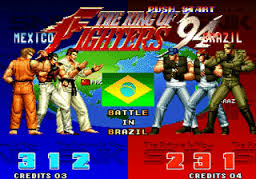
SNK had another trick up their sleeves for the Neo Geo in 1994. The King of Fighters 94 began the long-running KOF series. The series would be an annual release until 2003. KOF 1994-2003 would all be on the original AES/MVS hardware. The KOF games would find homes on the Sega Saturn, Sony PS1, Dreamcast, and PS2. In many ways, the KOF series became SNK's bread and butter.
In 1994, SNK would seek a solution to the problem of the Neo Geo's expensive cartridges. The Neo Geo CD makes its debut in 1994. Games were basically the same as the AES/MVS but with the addition of some nasty load-times. The console is famous for its lengthy load-times. Today, the Neo Geo CD is the more affordable option for casual collectors. Neo Geo CD games can be found for a fraction of the price of their AES counterparts. A second top-loading version was released soon after. As well, the CDZ featured a speedier CD drive. Despite being more approachable, the Neo Geo CD was still a niche console.
By 1996, times had changed. 2D games were starting to go the way of the dinosaur. However, SNK would have one last trick for the rapidly ageing AES/MVS hardware. Metal Slug harkened back to the "run and gun" game-play of Contra. Metal Slug would see several sequels on the AES/MVS and Neo Geo CD. Metal Slug was the last major smash for SNK and the Neo Geo. Darker days would come for SNK during the late 1990s.
After Metal Slug, SNK managed to keep with Neo Geo alive with stellar late- releases such as the Real Bout series, the underrated "Last Blade" games, and the fantastic "Garou:Mark of the Wolves". Despite some great games, times were changing. 2D games were falling out of fashion with consumers. Also, arcades soon began to die a quick death as home consoles began to keep technical pace with arcade hardware. By 2000, SNK was in deep financial trouble. In October of 2001, SNK filed for bankruptcy. One would think that this meant the end of the Neo Geo. However, the platform would remain on life support for a few more years.
The History of the Neo Geo-Part 1 of 3-JGC Feature-1989-1991
For fans of arcade games, the name Neo Geo is synonymous with quality and excellence. JGC will take a look at the history of the venerable Neo Geo in its three part feature.
Any history of the Neo Geo requires discussion of that of its creator: SNK. Shin Nihon Kikaku (SNK) had spent much of the 1970s and 1980s gaining ground in the thriving arcade industry, with a few home console attempts. Games such as Baseball Stars and Crystalis are NES/Famicom favorites. At the same time, SNK gained a strong following in arcades with games such as Ikari Warrors and Alpha Mission. However, what SNK would do next would radically alter the arcade landscape at home and abroad.
Released in 1990, the Neo Geo MVS (Multi Video System) was a technical powerhouse. Featuring a Motorola 68000 and a Zilog Z-80 co processor running at an amazing (for the time) 12MHZ, SNK's hardware was the biggest and baddest console on the block. The MVS also was revolutionary in that it allowed its cartridges to be swapped. Before the MVS, most arcade boards were not changeable. The MVS allowed 2, 4, or 6 game "slots". This meant that arcade operators could just buy new carts and swap them out when new releases came out. It also allowed for multiple games for players to enjoy. Today, a few of these ancient beasts can be found still running throughout the world in various laundromats and pizza parlours.The MVS was a massive success for SNK and thousands of machines were sold across the globe during the early 1990s and beyond.

In Japan, SNK began a trial of placing Neo Geo rental units in hotels. Demand for the console reached a swelling point, and SNK soon decided to prepare for a home release of the console shortly after its success in Japanese hotels.
Released in 1990 at a price of over 58,000 yen (over $1000 usd adjusted for inflation), the Neo Geo AES (Advanced Entertainment System) was the most expensive home console ever released. Games retailed for over half of the console's price at around 28,000-32,000 yen each. The high price of the games was attributed to the cost of rom chips at the time. Neo Geo carts were typically 10x larger than other consoles of the day. Quality certainly came at a premium.

The Neo Geo's games came in huge clam-shell cases with massive cartridges. Early titles for the system included arcade-perfect ports such as Magician Lord, Nam-1975, and Baseball Stars. For the first time, arcade-perfect games were in the average gamer's living room. Magician Lord is an early favorite for most gamers and fans of the console. A 2D action-platformer with amazing sprites, it is certainly the best of the bunch.
In addition to the amazing graphics and sound, the Neo Geo featured several other technical firsts. Alongside the console, SNK released a "memory card". This small unit was the first memory card released for a home console.The memory card allowed transfer of saved games and data from the arcade MVS machines to your home AES console.

Another unique feature of the AES was its massive arcade joysticks. Truly bringing everything the arcades offered was amazing for those lucky enough to actually have a Neo Geo. While early titles were making their mark on the industry, it would take the runaway success of Street Fighter 2 for SNK to shift gears to a relatively new genre that would dominate arcades for much of the 1990s: the fighting game.........continued in Part 2
Any history of the Neo Geo requires discussion of that of its creator: SNK. Shin Nihon Kikaku (SNK) had spent much of the 1970s and 1980s gaining ground in the thriving arcade industry, with a few home console attempts. Games such as Baseball Stars and Crystalis are NES/Famicom favorites. At the same time, SNK gained a strong following in arcades with games such as Ikari Warrors and Alpha Mission. However, what SNK would do next would radically alter the arcade landscape at home and abroad.
Released in 1990, the Neo Geo MVS (Multi Video System) was a technical powerhouse. Featuring a Motorola 68000 and a Zilog Z-80 co processor running at an amazing (for the time) 12MHZ, SNK's hardware was the biggest and baddest console on the block. The MVS also was revolutionary in that it allowed its cartridges to be swapped. Before the MVS, most arcade boards were not changeable. The MVS allowed 2, 4, or 6 game "slots". This meant that arcade operators could just buy new carts and swap them out when new releases came out. It also allowed for multiple games for players to enjoy. Today, a few of these ancient beasts can be found still running throughout the world in various laundromats and pizza parlours.The MVS was a massive success for SNK and thousands of machines were sold across the globe during the early 1990s and beyond.
In Japan, SNK began a trial of placing Neo Geo rental units in hotels. Demand for the console reached a swelling point, and SNK soon decided to prepare for a home release of the console shortly after its success in Japanese hotels.
Released in 1990 at a price of over 58,000 yen (over $1000 usd adjusted for inflation), the Neo Geo AES (Advanced Entertainment System) was the most expensive home console ever released. Games retailed for over half of the console's price at around 28,000-32,000 yen each. The high price of the games was attributed to the cost of rom chips at the time. Neo Geo carts were typically 10x larger than other consoles of the day. Quality certainly came at a premium.
The Neo Geo's games came in huge clam-shell cases with massive cartridges. Early titles for the system included arcade-perfect ports such as Magician Lord, Nam-1975, and Baseball Stars. For the first time, arcade-perfect games were in the average gamer's living room. Magician Lord is an early favorite for most gamers and fans of the console. A 2D action-platformer with amazing sprites, it is certainly the best of the bunch.
In addition to the amazing graphics and sound, the Neo Geo featured several other technical firsts. Alongside the console, SNK released a "memory card". This small unit was the first memory card released for a home console.The memory card allowed transfer of saved games and data from the arcade MVS machines to your home AES console.

Another unique feature of the AES was its massive arcade joysticks. Truly bringing everything the arcades offered was amazing for those lucky enough to actually have a Neo Geo. While early titles were making their mark on the industry, it would take the runaway success of Street Fighter 2 for SNK to shift gears to a relatively new genre that would dominate arcades for much of the 1990s: the fighting game.........continued in Part 2
Splatterhouse Part 2-Megadrive/Genesis Review
Splatterhouse Part 2 was released four years after the arcade original and two years after the PC Engine/Turbografx-16 hit. Picking up with the saga of Rick Taylor, Splatterhouse 2 was met with mixed reviews upon release. Let's take a look at why this sequel has failed to age as gracefully as the first game in the series.
Splatterhouse Part 2 is really more of the same. For those who played the original, this means lots of gore and lots of guts. Modern gamers might fail to realize that in 1992, this series was certainly one of the most gory games out there. Splatterhouse Part 2's monsters appear even more demented and grotesque than the first game. While it might seem fairly tame nowadays, I did feel a tad disgusted by the 16-bit depictions of mutilated corpses and beasts.
The gameplay and story in the sequel do not really deviate from the first game. You play as the same hero, Rick Taylor. This time, Rick has been tempted by the "terror mask" to go back to the mansion from the first game to save his girlfriend Jennifer, who was killed in the first game. The story is not terribly deep, but it works for the b-movie setting. Like the first game, you make your way through several levels of the mansion and grounds, killing every demonic nasty in the way.
Rick is still armed with his fists and kicks as his primary weapons. You can pick up boards, bones, and even guns to help dispatch the demon spawn you face. Gameplay is quite mindless, and do not expect any serious depth. The only variation is the boat levels, where you face off against monsters using a projectile weapon. Splatterhouse Part 2 definitely does not stray from the formula laid out in the first game. This is not necessarily a bad thing, as Splatterhouse was a solid action game in its day.
Those expecting a long and deep game will certainly be disappointed by this sequel. The game can be beaten is a couple of hours. While not terribly difficult, it can be somewhat of a challenge for novice players. As a sequel, Spatterhouse Part 2 plays it safe and failed to innovate. However, it is certainly not a bad game or sequel. For collectors, expect to pay over $100 dollars for a complete copy of this rare game. Is it worth it? .........Not really.
Rating: 7/10
Shinobi-JGC Series Overview Part 2
In 1995, Shinobi would make its way to Sega's new 32-bit system, the Sega Saturn. Released in the West as Shinobi Legions, Shin Shinobi Den was an attempt to resurrect the series after relative obscurity in the mid-1990s. The game was met with mixed reviews upon release.
Like many other mid-1990s games, Shin Shinobi Den used a combination of digitized graphics and sprites.Gameplay is adequate, but lacks the polish and refinement of the 16-bit Super Shinobi games. Not as bad as many have said, the game in nonetheless somewhat mediocre in relation to other stellar entries in the series. Largely forgotten today, the game can be had for fairly cheap in Japan. Shin Shinobi Den failed to make any significant impact upon release. Besides a very sub-par GBA released only in the West, the series laid dormant until the early 2000s.
In 2002, Shinobi would make a triumphant return for the PS2. Developed by Sega's Overworks division, this 3D action game was the boost that the dormant series needed. In the game, you play as Hotsuma.As a new character, the new game separates itself from the saga of the Musashi family in previous games. Combat relied on a combination of sword combos and ninja magic. Praised by many in the video game press, the game was criticized by some for being too repetitive. Shinobi was also somewhat overshadowed by the Ninja Gaiden remake for Microsoft's new Xbox, which was released very close to the Shinobi remake.

In the game, you spend a great deal of time fighting an endless horde of similar-looking ninja cyborgs. Despite this, the great level design, awesome music, and challenging boss battles certainly satisfied this author. The game has been building in legacy, and is now considered a PS2 classic.

The following year, Shinobi received a sequel in the form of Kunoichi. Released at Nightshade in Western markets, the game was seen as more of the same as Shinobi. The game is very similar to Shinobi and uses the same graphics engine, nearly identical game-play, and even the same music composers. If you like the 2002 Shinobi game, you cannot really go wrong with this one. Kunoichi received a lukewarm critical reception and failed to make a significant dent in the video game sales' charts.
Of mention is the portable Shinobi games. Two Game Gear games were released in the early 1990s. The GG Shinobi 1 and 2 were side-story games that tried to bring the action to Sega's portable. Short games, they nevertheless are challenging and feature some great tunes. In the GG games, you can switch between different coloured ninjas, each with their own unique abilities. The games can be found today for rock-bottom prices. Despite the limited graphics, series fans might enjoy give the games a whirl.
As of 2016, the once-mighty Shinobi series has laid dormant again. Released in 2011, a 3DS game known only as "Shinobi" was the last attempt to keep the series alive. A 2D platformer with 3D polygons, the game was considered unfairly challenging and was largely ignored by the press and public. It can be had for less than $10 on today's market.
Sunday, 6 March 2016
Shinobi-JGC Series Overview Part 1
As one of Sega's longest running series, the Shinobi games are some of the most classic games from the 80s and 90s. JGC will take a look at this underrated series and the games that made Shinobi a household name.
Released to arcades in 1987, the original Shinobi was the game that spawned its various ports to home consoles. Groundbreaking for the time, you play as Joe Musashi, a ninja who is tasked with rescuing students from the hands of a terrorist group. You rescue the students and progress to the next level. Boss battles are frequent and tough. The arcade game features bonus levels between levels, where Joe throws shurikens at ninja enemies.
Shinobi would find its way to several home consoles. Perhaps the most famous version was the version for the Sega Master System/Mark III. Featuring much less detailed graphics, the port was still enjoyable and kept the spirit of the arcade original. The music is great, and the little SMS soundchip pumps out some great ninja tunes. The SMS/M3 port is not nearly as difficult as the arcade original, but remains a challenging game. Noticeable changes from the original include more weapons, different music that repeats often, a lack of an ending, and a life-bar. Some have stated that these changes make the game too easy and slow-paced, which is a point that could certainly be considered true.
In 1989, the game would arrive on NEC's PC Engine. Done by Asmik, the port is considered a more faithful port of the Arcade original. Despite missing a level, most of the arcade game is kept intact here. One hit and you're dead. The game will test your patience and have you pulling out your hair. With much better visuals, closer music, and the difficulty of the original, purists will certainly prefer this port. The game would find its way home to several home computers, but most of them outside of Japan.
Shinobi would get its only true arcade sequel in the form of Shadow Dancer in 1989. Vastly different from the Megadrive/Genesis version, the arcade original has different levels, music, and sprites. You take control of Hayate, Joe Musashi's son. Hayate's dog Yamato was seen by many as a distraction in terms of gameplay. Yamato assists Hayate by helping take down enemies. Gameplay is fairly similar to the arcade original. Still tough as nails, the game is a major challenge. Stages are typical for the time, an airport, a train level, and a mountain base. The game is rather short, and can be finished rather quickly. The arcade original is mostly forgotten these days and has not found new life on various retro compilations, unlike its successor.
For many, the true sequel to Shinobi was the Megadrive/Genesis The Super Shinobi (aka "Revenge of Shinobi". Released in 1989, the game was a early hit for Sega's new 16-bit console. A very challenging game, it is famous for several reasons. The first is the awesome soundtrack by Yuzo Koshiro of Streets of Rage/Bare Knuckle fame. The soundtrack is awesome, and you will be humming the tunes for days and weeks after playing the game.
Another reason the game is so famous is its boss battles. Not only do you battle Spiderman, you also will face off against bosses resembling Batman, Godzilla, and the Terminator. The game had to be released several different times to get around some of the copyright wrangles Sega faced for this one. New gameplay elements include a double-jump, more use of ninja-magic as an essential gameplay mechanic, and limited shurikens (yes, they can run out). Today, the game is considered a true Megadrive/Genesis classic.
In 1990, a Megadrive port of Shadow Dancer would be released to home consoles. A reworked version of the arcade original, the game is not quite up to par with The Super Shinobi or The Super Shinobi II. Shadow Dancer looks great, with colourful backgrounds and detailed sprites. Your dog Yamato is back, but this time has a charge meter for his attacks. The game has mostly different levels and music from the arcade game. While the soundtrack is good, don't expect the greatness from The Super/Revenge of Shinobi. A very short entry in the series, the game can be beaten in under an hour by experienced players and only has 5 levels. Not a bad game, but the weakest of the Megadrive entries, in my opinion.

Shinobi's finest hour would come in 1993. Known as Shinobi III in the West, The Super Shinobi II would push the Megadrive/Genesis to its absolute limit. A true classic, the game is easily among the best looking Megadrive titles. Incredible boss battles, killer music, and solid gameplay make for the quintessential Shinobi experience. While the game is not quite as challenging as The Super Shinobi, it is still quite hard. The Super Shinobi II would mark the end of the original Shinobi games and the first era for the series. Darker times would be ahead.
Makaimura (Ghosts and Goblins)-JGC Series Overview Part 2
Released in 1991, Chomakaimura (Super Ghouls and Ghosts) was the third major release in series, and the first not to have an arcade release first. The game was released shortly after the release of the SNES in 1991. Chomakaimura was a great showcase of the new system's horsepower. Featuring scaling and mode-7 graphics in some levels, the game looks amazing. Featuring some of the best graphics on the SFC/SNES, the game is a true visual delight. Vivid sprites and backgrounds, cool effects (for example, the way the ground lowers and rises) make for a real treat. If Daimakaimura looked great, this game looks even better, showing off the added colour-palette of the new SNES/SFC hardware.
Chomakaimura added an important gameplay addition to the franchise. The "double-jump" added a layer of depth to the game and made it more a pure platforming game. The mechanic was well-liked by many. Many consider the game not quite as punishing as the first two games. I would certainly agree. The game is still challenging, make no mistake about that. However, more powered weapons, easier bosses, and the double jump mechanic make for a less hair-pulling nightmare. The game was praised upon release and sold very well, making it a true SFC/SNES classic.
The first three games would appear on Capcom Generations 2, released on the Playstation 1 and Sega Saturn in 1998. The compilation featured the arcade versions of Makaimura (Ghosts and Goblins), DaiMakimura(Ghouls and Ghosts) and the Super Famicom-only Chomakaimura. This compilation is the best way to enjoy the first three games. The ports are great, and the compilation even features some extras. During the late 1990s, the main series lay mostly dormant. However, in 1999, Makaimura for the WonderSwan was released. The black and white game took elements from all three versions of the game. Few outside of Japan (and probably in Japan) have played this game. It remains an obscure entry in the series.
Released in 2006, Gokumakaimura (Ultimate Ghosts 'n Goblins) was the last entry major entry in the series to date. Featuring 3D graphics on a 2D playing field, the game was a mix of old and new elements. The core gameplay remained intact, however, the game added some new elements. Items can now be added and stored for upgrading armour and weapons. Some purists found the game to stray too much from the classic Makaimura formula and presentation. The game is enjoyable and challenging. Nevertheless, I can see how some might find the game to be the blacksheep of the family. Unlike the other games, I have yet spend a great deal of time with the game. A revised version of the game (Gokumakaimura Kai) was released in 2007. It addressed some of the issues that gamers found problematic with Gokumakaimura.
Friday, 4 March 2016
Makaimura (Ghosts and Goblins)-JGC Series Overview Part 1
Known in the West as Ghouls and Ghosts/Ghosts and Goblins, Makaimura has a long history. Let's take a look at this classic Capcom arcade series.
The first game in the series, Makaimura (Demon World Village) hit Japanese arcades in 1985. Known as Ghosts and Goblins in the West, the game would soon gain infamy for its insane difficulty. This is a trend that would become a hallmark of the series. In the first game, you play as Sir Arthur, who sets out on a quest to rescue his beloved Prin Prin from the clutches of the evil Satan (Loki in the West). Armed with a flimsy suit or armour and a lance, Sir Arthur faces an uphill battle from the start.
Gameplay in Makaimura is quite simple and remained fairly consistent throughout the series. You can only take two hits before losing a life. The first hit takes away your suit of armour, and the second takes your life. This mechanic makes the difficulty of the game insane at best. This basic mechanic would be somewhat remedied in a later game, but more on that later.
The arcade original is leaps and bounds better-looking and sounding than later ports. Nowadays, it can be found on various Capcom arcade compilations across various platforms. Regardless of the platform, the game is famous for introducing one of the cruelest twists in video game history. After beating the "final boss", you are informed that a cruel trick has been played and that you must start the game over again and play through it all again to face the true final boss. I cannot imagine how few people actually did this in the days before savestates. Even with savestates, the game is extremely difficult and will drive you mad.
Despite the popularity of the arcade game, the NES/Famicom port of Makaimura was where most of us children of the 1980s were introduced to the series. The Famicom port is certainly watered down graphically. The big and colourful sprites are downgraded on the 8-bit Nintendo platform. The bright and wonderful sounding sounds are also replaced with Famicom/NES bleeps. While not horrible, the sound definitely took a hit.
Gameplay on Nintendo's machine is also quite spastic as times. The game feels choppy, and it can feel as if you lack smooth and refined control over your character and his movements. I would recommend playing the arcade original, if given the chance. It is a far more technically impressive achievement and is one of the best looking games from the mid-1980s. Despite several ports to Western computers, the Famicom port was the only major Japanese port during the 1980s and early 1990s.
If the first game was a cult classic, the second became a major ht for Capcom. Daimakaimura hit Japanese arcades in 1988. The game was a visual and auditory tour de force. With amazing graphics, great music, and impressive level design, the game is a true classic. The sequel retained all that made the original game so frustrating. You still die after two hits, you still face wave after wave of demon-spawn, and you still need to repeat the game over again after beating the "final" boss. This game is definitely not for the faint of heart. Like the original game, the arcade game is the best-looking, coming from an era when arcade games generally looked much better than their home counterparts. After Forgotten Worlds, the game was the second game to use the new Capcom CPS-1 hardware that would be used a couple of years later to create Street Fighter 2.

The game would find its way into living rooms shortly after its arcade release. First came the Mega Drive/Genesis version in 1989. While definitely taking a graphical hit, the game looked and played great on Sega's new hardware. This version of the game is the most common that most gamers have played. In 1990, a port was released for NEC's new Supergrafx console. Being a massive failure, the console never found a mainstream audience. However, the port of Daimakaimura is considered by many to be the best home port in terms of replicating the arcade original. A version was also released for the Sharp X68000 computer. This version is also held in high regard today. A Sega Master System version was released only in North America and Europe. Today, it is a prized collector's item.
The first game in the series, Makaimura (Demon World Village) hit Japanese arcades in 1985. Known as Ghosts and Goblins in the West, the game would soon gain infamy for its insane difficulty. This is a trend that would become a hallmark of the series. In the first game, you play as Sir Arthur, who sets out on a quest to rescue his beloved Prin Prin from the clutches of the evil Satan (Loki in the West). Armed with a flimsy suit or armour and a lance, Sir Arthur faces an uphill battle from the start.
Gameplay in Makaimura is quite simple and remained fairly consistent throughout the series. You can only take two hits before losing a life. The first hit takes away your suit of armour, and the second takes your life. This mechanic makes the difficulty of the game insane at best. This basic mechanic would be somewhat remedied in a later game, but more on that later.
The arcade original is leaps and bounds better-looking and sounding than later ports. Nowadays, it can be found on various Capcom arcade compilations across various platforms. Regardless of the platform, the game is famous for introducing one of the cruelest twists in video game history. After beating the "final boss", you are informed that a cruel trick has been played and that you must start the game over again and play through it all again to face the true final boss. I cannot imagine how few people actually did this in the days before savestates. Even with savestates, the game is extremely difficult and will drive you mad.
Despite the popularity of the arcade game, the NES/Famicom port of Makaimura was where most of us children of the 1980s were introduced to the series. The Famicom port is certainly watered down graphically. The big and colourful sprites are downgraded on the 8-bit Nintendo platform. The bright and wonderful sounding sounds are also replaced with Famicom/NES bleeps. While not horrible, the sound definitely took a hit.
Gameplay on Nintendo's machine is also quite spastic as times. The game feels choppy, and it can feel as if you lack smooth and refined control over your character and his movements. I would recommend playing the arcade original, if given the chance. It is a far more technically impressive achievement and is one of the best looking games from the mid-1980s. Despite several ports to Western computers, the Famicom port was the only major Japanese port during the 1980s and early 1990s.If the first game was a cult classic, the second became a major ht for Capcom. Daimakaimura hit Japanese arcades in 1988. The game was a visual and auditory tour de force. With amazing graphics, great music, and impressive level design, the game is a true classic. The sequel retained all that made the original game so frustrating. You still die after two hits, you still face wave after wave of demon-spawn, and you still need to repeat the game over again after beating the "final" boss. This game is definitely not for the faint of heart. Like the original game, the arcade game is the best-looking, coming from an era when arcade games generally looked much better than their home counterparts. After Forgotten Worlds, the game was the second game to use the new Capcom CPS-1 hardware that would be used a couple of years later to create Street Fighter 2.

The game would find its way into living rooms shortly after its arcade release. First came the Mega Drive/Genesis version in 1989. While definitely taking a graphical hit, the game looked and played great on Sega's new hardware. This version of the game is the most common that most gamers have played. In 1990, a port was released for NEC's new Supergrafx console. Being a massive failure, the console never found a mainstream audience. However, the port of Daimakaimura is considered by many to be the best home port in terms of replicating the arcade original. A version was also released for the Sharp X68000 computer. This version is also held in high regard today. A Sega Master System version was released only in North America and Europe. Today, it is a prized collector's item.
Subscribe to:
Posts (Atom)


