Released in 1987 in Japan, the PC Engine (PCE) was the main fruit of labour born of the partnership of software company Hudson and Japanese computer giant NEC. Nearly overtaking Nintendo's Famicom at one point, the system has been regulated to relative obscurity in the West as the Turbografx-16. While the TG-16 tanked in North America and Europe, the PCE was a smash in its homeland. Let's examine the fascinating history of this minuscule little white block.

The marriage of NEC and Hudson began after Hudson's powerful new graphics chips were rejected by Nintendo for use in a potential new console. With the runaway success of the Famicom in Japan, many other Japanese tech companies wanted to enter the burgeoning console market. NEC found their opportunity with Hudson's new chipset. The new console would be designed by Hudson and manufactured by NEC. Dubbed the PC Engine, it used a 8-bit CPU and dual 16-bit GPUs. Arguments about the true classification of the console remain up for debate today. Some consider the PCE/TG16 to be 16-bit, while others consider it to be an 8-bit machine. Certainly, it occupies a unique place as a console that can only be described as a hybrid between both worlds.

Released on October 30th, 1987, the PCE was a near instant success. Its innovative design, compact size, and impressive graphics were a hit with the Japanese public. Despite a small library in Fall 1987, 1988 brought Namco on board. Growing tried of Nintendo's stranglehold over Japanese developers, Namco was an early supporter of the system. Many of the PC Engine's great titles were Namco releases. These titles included Splatterhouse, Dragon Spirit, Galaga 88, and countless others.

Initially, PC Engine games came exclusively on "HuCards". These credit-card size ROM-boards were a tiny-sized format for a very tiny console. Hudson has developed similar technology in the form of "Bee Cards" for the MSX computers in Japan. HuCards were a novel feature at a time when most games came on bulky plastic cartridges.

The majority of the games most memorable earlier titles came on HuCards. Games such as PC-Genjin 1-3 (Bonk 1-3 in the West), GunHed (Blazing Lazers), and countless other releases shipped on HuCards. However, the PC Engine was soon to make its first format addition.

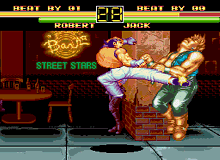
Despite strong sales of the HuCard-based system, NEC and Hudson felt the need to create an CD-ROM add-on for the PCE. The CD-ROM2 add-on was released in December of 1988. It was the first CD-based console on the market. While the launch line-up was sparse (Fighting Street and No-Ri-Ko, two very mediocre games) sales were brisk and the CD-ROM2 managed to sell quite well despite being priced at 57,800 yen. This was very expensive, even for the time.

Several other variations of the main PC Engine console would be released in the late 1980s. Pictured above is the PC Engine Core-Grafx and Core-Grafx II. These units gave the PCE A/V out and made some minor hardware revisions.

Now a prized collector's item, the PC Engine Shuttle was released in 1989 and aimed at younger kids. It featured a strange spaceship-like design and bata-rang-style controller. The Shuttle also did not allow connection to the CD-ROM2 unit, unlike the Core-Grafx I and II and White PC Engine.

Around the same time, some other curious models were released by NEC. The PC Engine LT was a laptop-style PCE that came with its own 4-inch screen. The units were very expensive due to the cost of LCD screens at the time, and prices today are no better. Except to pay over $1000 for a boxed unit.
In 1990, the PC Engine GT was released. A truly hand-held version of the PC Engine, it was more powerful than any other handheld on the market at the time. However, it failed to match the success of the Nintendo GameBoy due to its much higher cost, battery consumption, and much-larger size. The GT is also a very expensive collector's item in PCE circles today.

Back to the games. From 1987-1990, the PC Engine would see the release of countless shooters, platformers, and RPGs. For shooter fans, GunHed, Image Fight, Super Star Soldier, and countless others would satisfy. For platformer fans, games such as PC Genjin (Bonk's Adventure), Makyo Densestu (The Legendary Axe), and Tora e no Michi (Tiger Road) would keep fans of the genre satisfied. On the growing RPG front, Neutopia and Ys Books 1 and 2 would keep those looking for a Final Fantasy or Dragon Warrior mostly happy. For nearly every kind of gamer, the PCE had something unique and fun to offer. To be continued in Part 2.............(1991-1996)